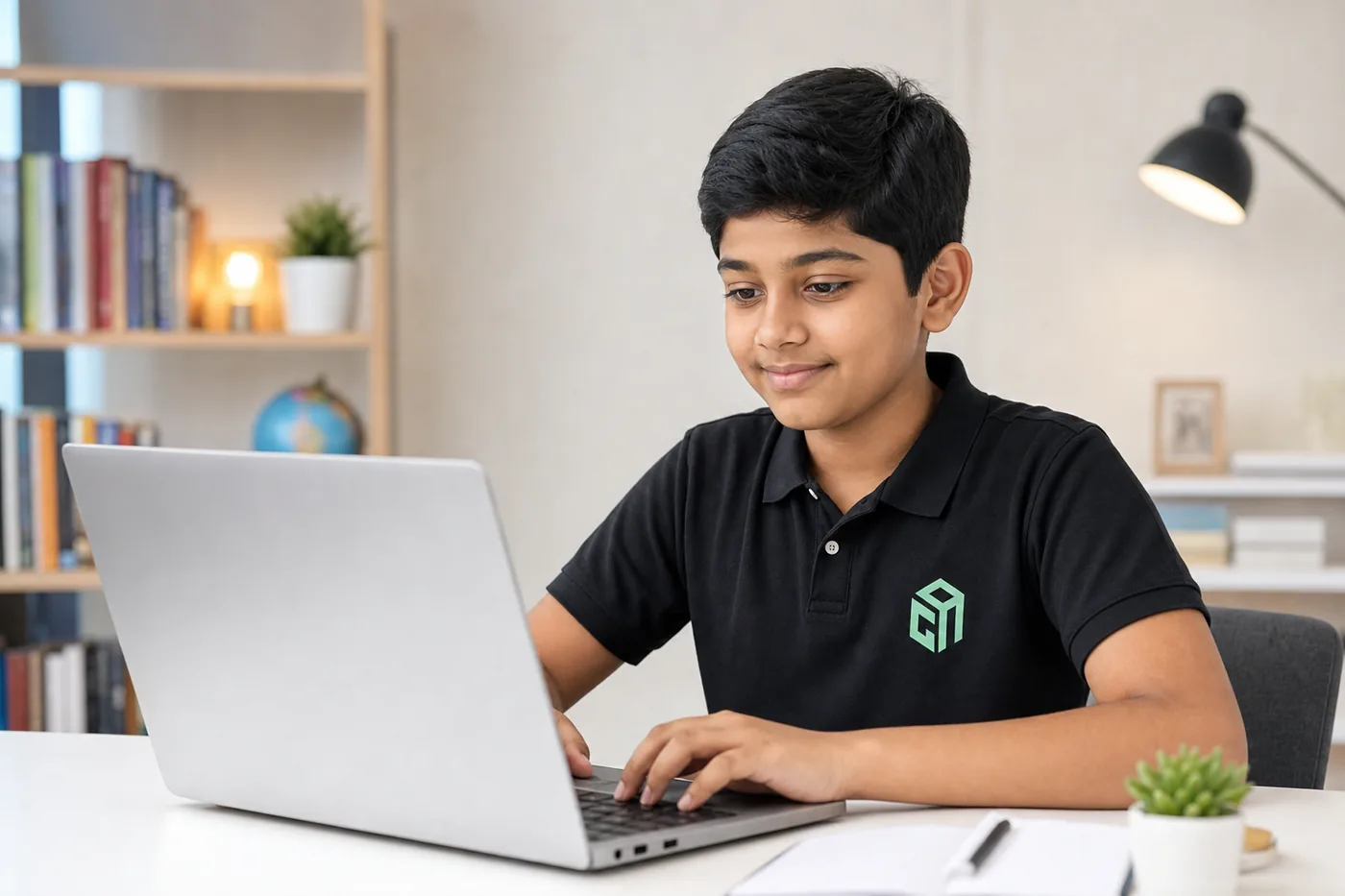
When parents ask me, “What is Python?” I keep the answer simple. Python is a coding language that reads almost like normal English. That is why so many kids feel comfortable with it. They are not fighting strange symbols on day one. They are learning how to tell a computer what to do, step by step.
Think of Python like giving clear instructions. If you can write, “If the button is pressed, turn on the light,” you are already thinking like a Python programmer. For school students in Class 3 to 12, that clarity matters. Coding should feel logical, not scary.
What Is Python, in the Simplest Way?
Python is a language we use to write programs. A program can be a game, a calculator, a quiz app, a chatbot, or a small AI tool. Python is popular because the code is short, clean, and easy to read.
Here is a tiny example. In Python, you can write: print("Hello, I am learning Python!"). When the program runs, the computer shows that message on the screen. Small wins like this build confidence fast.
- Python uses simple words like print, if, else, and for.
- It works on laptops, school projects, AI tools, and many real apps.
- Big companies use Python for websites, data, games, and AI.
- Kids can see results quickly, which keeps them interested.
Why Should Kids Learn Python?
I have seen shy students become confident after building their first Python project. That is the biggest reason I recommend it. Python teaches kids how to think, plan, test, and fix problems.
- It builds logical thinking: children learn cause and effect, step order, and debugging.
- It connects to school subjects: math, science, and even language skills improve when kids explain their code.
- It opens doors to AI: Python is used in chatbots, image tools, data projects, and beginner AI apps.
- It creates real projects: games, websites, automation tools, and science experiments.
- It prepares them for the future: coding is now part of many careers, not only software jobs.
One Class 12 student told me Python helped in school exams because he finally understood loops and conditions through projects, not just textbook lines. That is the kind of shift parents notice at home too.
What Age Is Best to Start Python?
Many children can start typed Python around Class 5 or Class 6, especially if they already know basic computer use. Younger students in Class 3 or 4 can begin with visual coding first, then move to Python when they are ready.
- Class 3 to 5: Start with visual logic, then simple Python activities.
- Class 6 to 8: Strong age for Python basics, games, and small apps.
- Class 9 to 12: Python for exams, AI projects, chatbots, and portfolio work.
Fun Python Projects Kids Can Build
Kids stay motivated when they build something they can show family and friends. In our live classes at GeekashramJr, students usually start small and grow step by step.
- Number guessing game
- Quiz app for friends
- Simple calculator
- Password checker
- Story generator
- Basic chatbot
- Weather or data display project
Python vs Other Coding Options for Kids
Scratch is great for very young beginners. JavaScript is great for websites. Robotics is great for hands-on learners. Python sits in the middle as a powerful first text language because it is readable and useful for both school and future AI learning.
If your child likes puzzles, stories, games, or AI ideas, Python is usually a strong fit. If they love building physical things, combine Python with robotics projects for even better engagement.
How Parents Can Support Python Learning at Home
- Ask your child to explain what their code does in simple words.
- Celebrate small fixes, not only perfect results.
- Give time for debugging. Mistakes are part of learning.
- Encourage one mini project every week.
- Choose live mentor support if your child gets stuck often.
Final Thought
Python is not just a coding language. It is a confidence builder. It helps kids become creators, not only users of technology. If you want your child to learn Python with live mentors, small projects, and patient guidance, start with one simple goal: build one project they are proud to show.
At GeekashramJr, we teach Python with AI for Class 4–12 through live online classes — usually 25–30 live sessions on average to complete the full syllabus. Class 3 beginners usually start with Scratch. If you are unsure where your child should begin, try a session and we will suggest the right track based on age, interest, and current level.