Robotics

Obstacle-Avoiding Robot for Kids: Beginner Build Guide | 2026

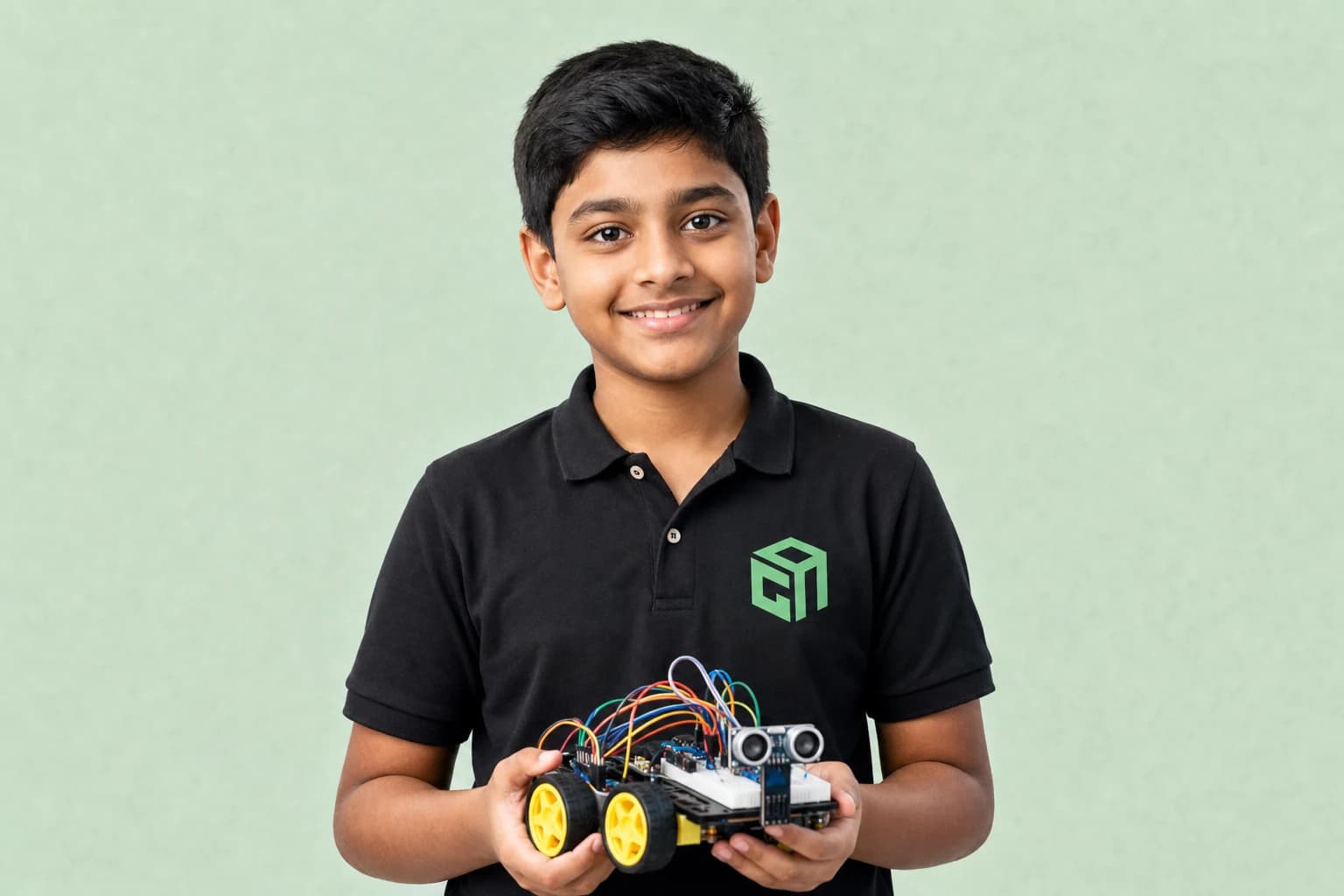
An obstacle-avoiding robot uses an ultrasonic (or IR) distance sensor to stop or turn before hitting objects. This beginner guide explains the logic kids learn before building one in class.

Tarun Kashyap
GeekashramJr mentor
published
6 Minutes
read time
Beginner obstacle-avoiding robot project for kids robotics

An obstacle-avoiding robot measures distance ahead and changes behaviour before a crash. If the path is clear, it drives forward. If something is close, it stops and turns. That single idea teaches sensors, decisions, and motor control together.

Core Logic

  • Read distance from ultrasonic/IR sensor
  • If distance is safe → move forward
  • If distance is too small → stop
  • Turn left or right, then check again

Skills Kids Practice

  • Threshold thinking (what counts as “too close”?)
  • Debugging false triggers and noisy readings
  • Coordinating two motors for turns
  • Explaining robot behaviour to parents and mentors

Build Order We Recommend

Breadboard LED → buzzer → sensors 101 → motor test → line-follower → obstacle avoider. Skipping basics makes robot day frustrating.

Ready for live robotics? Try a GeekashramJr session and get a kit + project plan for your child’s class.

FAQ

Obstacle-Avoiding Robot for Kids — questions parents ask

The robot measures distance ahead. If an object is too close, code stops forward motion and turns before continuing.

Ultrasonic distance sensors are common and easy to explain. Some kits use IR distance sensors instead.

LED, buzzer, basic motor tests, and simple sensor readings. Then the full robot is much easier to debug.

Not sure which track fits your child?

Book a 45-minute trial session. A mentor works with your child, sees how they think, and recommends the track. The trial fee is adjusted if you continue.

Chat withExpert